TL;DR — There's no universally right way to propose. The only question that matters: does this match your partner? Below — a real Austin proposal photographer's take on intimate vs. big-statement moments, the best Austin proposal spots (Congress Avenue Bridge, Mount Bonnell, the Wildflower Center, the Hill Country), and how to plan one that actually feels like you.
Picture it: late August 2025. My husband Johnny and I are half-watching the Kelce Brothers' podcast — with Taylor Swift as the guest. Cue immediate side-eye between us. Are they going to do it? Did they already do it? Cut to the next morning: she posts the garden proposal. "Your English teacher and your gym teacher are getting married." The whole internet falls over.
That proposal — the lush florals, the striped Ralph Lauren dress, the custom Old Mine Brilliant Cut ring — became the cultural reference point for proposals for the next year. And I get the appeal. It was perfect. It was also extremely Taylor. Garden, vintage couture, intentional Easter eggs, every single design choice on-brand. Which is the entire point of this post.
The actual question isn't cozy vs. loud. It's: does it sound like you?
That Swift-Kelce proposal looked nothing like our proposal — and ours looked nothing like the dozen-plus Austin proposals I've photographed in the last few years. They're not supposed to look alike. The whole job of a proposal is to feel correct for the two specific people inside it.
My own little Austin moment: Congress Avenue Bridge.
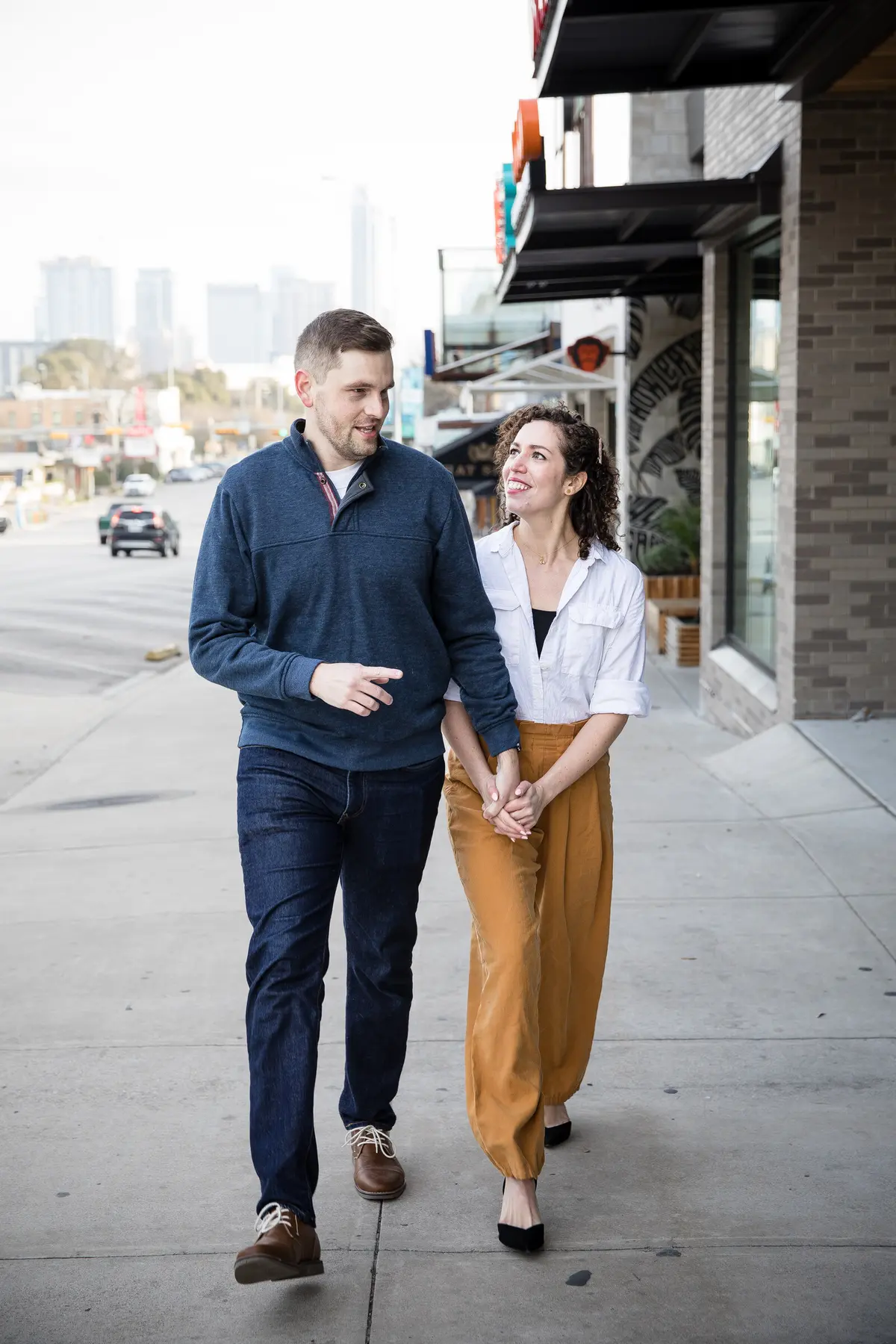
Johnny proposed to me on Congress Avenue Bridge. No staged florals. No string quartet. No drone shot. Just the two of us, the bats getting ready to do their thing underneath us, and the Austin skyline pinking up behind him as he knelt. It wasn't a Pinterest moment. It was an us moment.
That's the whole secret. Whether you're doing the cinematic full-production version or the just-the-two-of-you version, the question I ask every couple who books proposal photography in Austin is the same: What does your partner think a perfect Saturday looks like? Build the proposal out of that.
Sweet and small proposals: why they work.
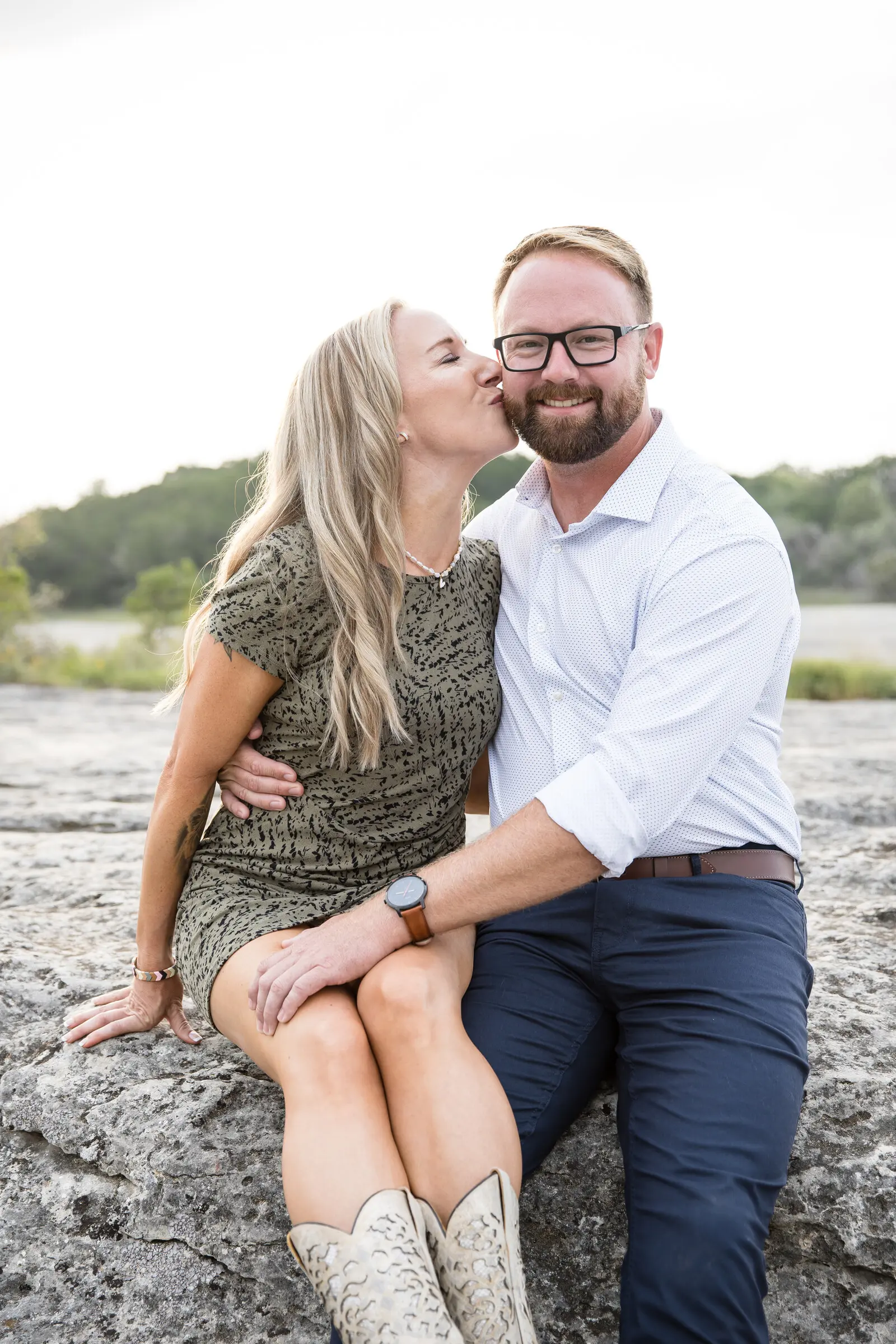
A quiet golden-hour proposal in the Hill Country — no audience, no production, all the feeling.
Small proposals get a lot of mileage out of three things:
- Purely personal. It's just the two of you. No need to perform for an audience or hit a cue.
- Permission to be a mess. Laugh too hard. Cry. Drop the ring (don't drop the ring). Fumble the speech. With nobody else watching, there's no version of this that's "wrong."
- Zero stage fright. If your partner would die before being the center of attention in a crowd, the cozy version is a gift to them.
Cozy doesn't mean unphotographed. Some of the best proposal galleries I deliver are the ones nobody but the couple knew about — me 100 yards away with a long lens, dressed like a confused dog walker, and them with no idea I'm shooting until I emerge from a hedge. That's the dream brief.
Big and bold: why those work too — and when they don't.
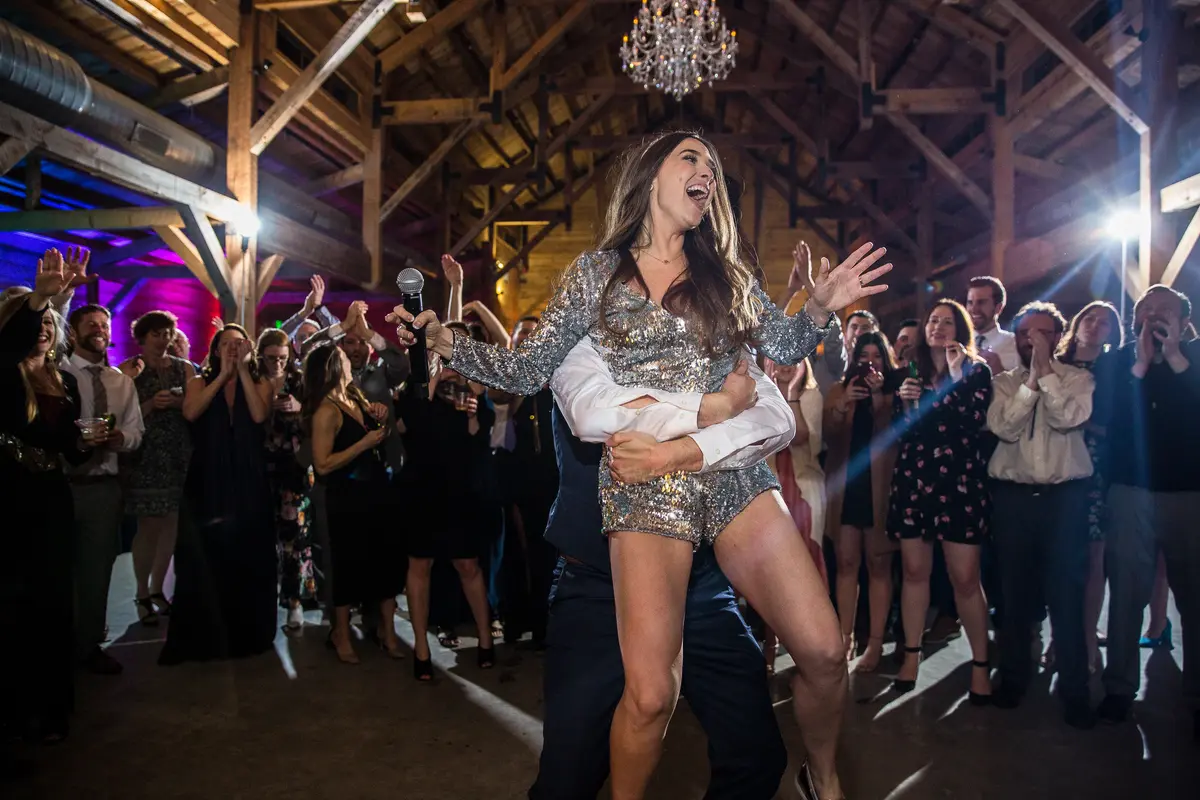
Now flip the coin. Some people are built for the big moment.
- Unforgettable flair. Fireworks. Surprise guests flying in. Your favorite band playing your song. A flash mob outside Franklin Barbecue. Cinematic.
- Shared celebration. Everyone you both love is already in the room when the answer happens. The "we're engaged!" calls turn into a real party three seconds later.
- Story material. This becomes the story your friends tell at parties for the next ten years.
The downside, in honest order:
- Pressure central. Everything's on display. If it doesn't go to plan, it doesn't go to plan in front of an audience.
- No do-overs. Once the camera is rolling and the crowd is gathered, you're committed.
- It can read performative. If your partner isn't a spotlight person, the staging can overshadow the moment.
Imagine your partner's face when a stranger starts recording. If that thought makes you cringe — plan private.
The best places to propose in Austin (a working list).
These are the spots Austin couples ask about most often, in roughly the order I get asked. All photographable, all scoutable, all with at least one good golden-hour window:
How I photograph proposals at The Bohde Collective.
The shoot itself takes about 60–90 minutes total. Here's the working pattern:
- Scouting call beforehand. We pick the exact spot, the exact time, where you'll come from, where the ring is hidden, and where I'll be. I check sunset time and weather.
- Day-of, I arrive 30 minutes early. Dressed to disappear into the location. Long lens. Backup camera. Backup spot in case anyone got the same idea.
- I shoot from a distance through the proposal itself. You and your partner have the moment to yourselves. No "look this way." No staging.
- After the yes, I emerge. Quick hug, brief explanation to the (probably stunned) partner, and we do 20–30 minutes of celebratory engagement-style portraits while the high is still on.
- You get a sneak-peek the same day. Five or six images by the time you're done celebrating. Full gallery in 2–3 weeks.
Whatever you do — do it like you.
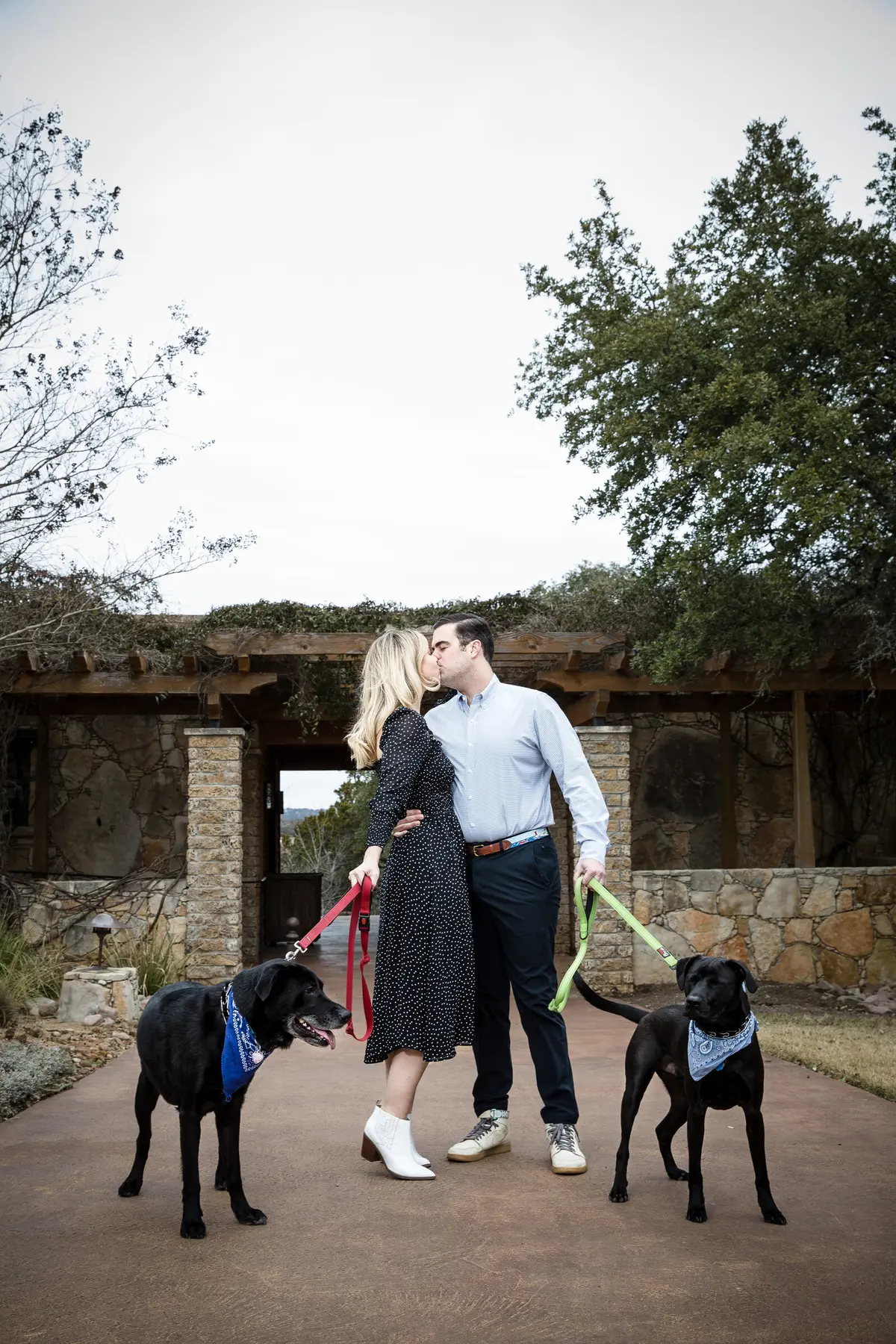
If the dogs need to be there for it to count — bring the dogs.
Two people on a bridge at sunset. A pair in front of a lighthouse. A lush garden where one of you sets a stunning floral trap. A private hotel suite. A flash mob mid-concert. A weeknight Tuesday on the back porch with takeout. All of these are correct answers — if they sound like you.
Authenticity beats aesthetics, every time. Real connection beats trending. The Bohde Collective philosophy on proposals is short enough to put in one sentence: do the one that's right for YOU.
Frequently asked questions.
Should I propose in public or private?
It depends entirely on your partner. If your partner loves the spotlight and would feel celebrated by a crowd, lean into a public moment. If your partner is more reserved and would feel pressured or self-conscious, go private. The single most reliable test: imagine your partner's face if a stranger started recording. If that thought makes you cringe, plan private.
Where are the best places to propose in Austin?
The Austin proposal spots couples ask about most often: Congress Avenue Bridge at sunset (where my own proposal happened), Mount Bonnell at golden hour, the Lady Bird Johnson Wildflower Center, Pennybacker Bridge overlook, Zilker Park near the rose garden, and the rooftop deck at The Oasis on Lake Travis. For something more private, the Hill Country has dozens of trailheads, vineyards, and lake spots that won't have a crowd.
How does a proposal photographer stay hidden?
A good Austin proposal photographer scouts the location ahead of time, picks a vantage point with a long lens (typically 70–200mm or 100–400mm), dresses like a tourist or jogger to blend in, and arrives 20–30 minutes early. The photographer should be invisible until you signal the moment is coming — and stay invisible until the partner says yes.
How much does proposal photography cost in Austin?
Proposal photography at The Bohde Collective starts at $695 and typically includes the proposal itself plus a short engagement-style shoot afterward once the partner is in on it. Pricing scales based on location, travel, and whether you want an extended engagement session bundled in. Full pricing is on the pricing page.
How far in advance should I book a proposal photographer?
Three to six weeks is ideal. That gives the photographer time to scout the location, coordinate timing with sunset, and plan a backup spot in case of weather. Last-minute proposals can be accommodated — I've shot proposals booked 48 hours out — but earlier is better.
Until next time — Be. Too. Much. — xo, Caity C. Jensen